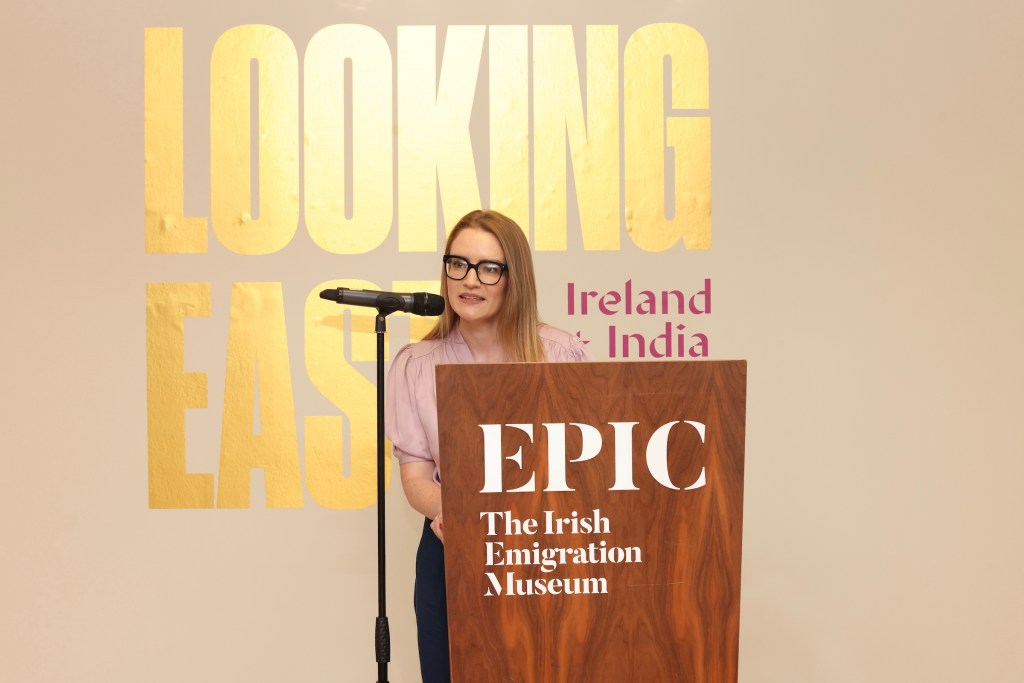
EPIC The Irish Emigration Museum, July 2024 — February 2025
Lokayata Gallery, Delhi, January 2025
Bengal Club, Kolkata, April 2025
St Joseph’s Academy, Dehradun, August 2025
Irish and Indian people share a long history of connection. Ireland was Britain’s oldest colony, and India its largest. Colonial authorities in Calcutta, Bombay and Madras drew on lessons learned in Dublin, Cork and Mayo, adopting similar political methods and views of their ‘subjects’. As well as providing a testing ground for imperial rule, Ireland supplied many of the soldiers that helped to defend and secure new territory for the British. Irishmen also came to occupy a prominent role in the colonial governance of British India, running seven of its eight provinces by the late nineteenth century. Antony MacDonnell, a Mayo-born Catholic who rose to the highest levels of the Indian civil service, went as far as to describe it as ‘a time when Ireland had temporarily relieved England of the task of governing India’.
After World War I, Britain faced mounting resistance to its presence in both Ireland and India. Irish and Indian nationalists in many cases supported and took inspiration from each other’s struggles. Just as Irish republicans like Éamon de Valera stressed the common cause of Ireland and India, Bengali freedom fighters drew comparisons between our colonial experiences. The Irish-descended Annie Besant established the All-India Home Rule League in 1916, and a year later became the first female president of the Indian National Congress. Others formed networks of solidarity in fighting for women’s rights. Margaret Cousins from Roscommon had been a prominent leader of the Irish campaign for female suffrage before moving to India, where she helped found the Women’s Indian Association in 1917 and worked closely with such activists as Muthulakshmi Reddy and Sarojini Naidu.
Indians are today among the fastest-growing immigrant communities in Ireland. However, Indian migration to this country stretches back much further in time. Dean Mahomet, a former soldier with the East India Company, published the first English-language book written by an Indian while living in Cork in the late 1700s. A century later, Mir Aulad Ali, a Muslim scholar from modern-day Uttar Pradesh, was appointed professor of Arabic, Hindustani and Persian at Trinity College Dublin. V. V. Giri, the fourth president of India, studied in Ireland during the revolutionary years (1913–1916) and was deeply affected by the events he witnessed. Looking East: Ireland and India highlighted some of the many historic ties between our two countries, exploring histories of migration, solidarity and resistance.
Exhibition video below, featuring interview with former Taoiseach Leo Varadkar, author Cauvery Madhavan, climate activist Theresa Rose Sebastian, Queer Asian Pride Ireland co-founder Pradeep Mahadeshwar and Satwinder Singh, chair of Eco Sikh Ireland.
Curated by Catherine Healy. Graphic design by Joanne Byrne. Videography by Dan Dunne. Research consultancy by Dr Jyoti Atwal.
 Catherine Healy